




A Conversation with the Incoming Editor-in-Chief of Clinical Biochemistry
Submitted by Dr. Jennifer Taher, Head of Publications Division
Dr. Joe El-Khoury will begin his term as Editor-in-Chief of the CSCC Journal, Clinical Biochemistry, on January 1, 2027. Dr. Jennifer Taher, Head of CSCC Publications Division, caught up with him to find out about his career journey, what inspires him, and his vision for the journal.
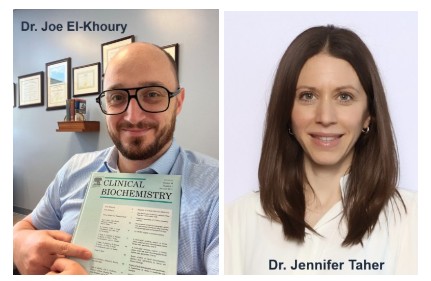
Q. Can you tell us a bit about your professional journey and what led you to becoming a clinical biochemist?
My journey into clinical biochemistry is probably best described as a combination of luck, family interference, and discovering that I was completely wrong about my career plans.
I grew up in Lebanon and studied Chemistry at the American University of Beirut. As an undergraduate, I knew I wanted to do something applied, something at the intersection of chemistry and technology. I loved using and interpreting results from analytical equipment like NMR, HPLC, infrared spectroscopy and mass spectrometry. So, chemical engineering seemed like the obvious choice. In fact, I distinctly remember telling my advisor, after doing a research project with her, that the last thing I wanted to do was research or become a professor. Clearly, that statement didn’t age well.
When I was applying to graduate programs in the U.S., my brother was already in Cleveland and had come across a presentation by a professor from the Clinical-Bioanalytical Chemistry PhD program. He suggested I look into it. So, I did. I liked the idea of applying chemistry to human health. Still, my heart was set on chemical engineering, but I figured it doesn’t hurt to consider other options, so I sent him applications for both graduate programs.
A few months later, he called to congratulate me on being accepted into the Clinical-Bioanalytical Chemistry PhD program. Naturally, I asked, “What about chemical engineering?” That’s when he casually informed me that the university only allowed one graduate application, and that he had decided to submit the Clinical-Bioanalytical Chemistry application instead. The irony here is that he was a chemical engineering major himself!
At that point, I figured I’d give it a try and transfer later if I didn’t like it. But within a few months of starting my PhD, I knew I had found the right field. I loved that I could apply my knowledge in analytical chemistry to develop methods for biomarkers, and that I could impact patient care with that work. By the end of the year, I joined the Clinical Biochemistry Laboratory at Cleveland Clinic, where I spent the next three years developing clinical trials and mass spectrometry-based methods for patient care. I then completed a two-year Clinical Biochemistry post-doctoral fellowship training there before moving to Yale for my first job out of training.
Fast forward to today, and I’ve been at Yale for the past 12 years, where I serve as Director of the Clinical Chemistry Laboratory and Professor of Laboratory Medicine. So, despite confidently declaring that I never wanted to do research and certainly never wanted to be a professor, I somehow ended up doing both. The lesson, I suppose, is that sometimes your career plans work best when your older brother ignores them.
Q. What attracted you to the position of Editor-in-Chief for Clinical Biochemistry?
Clinical Biochemistry holds a special place in my heart as the journal where I published my first scientific manuscript. It was a special issue on “mass spectrometry in laboratory medicine,” and my review article covered measuring vitamin D and metabolites by mass spec. I’ve continued to publish with the journal over the years, while also serving as a reviewer, and then joined its editorial board in 2021. So, I’ve been fortunate to witness and participate in the growth of the journal over the last 15+ years. When the opportunity to serve as its next Editor-in-Chief came up, I was excited to take that on and to help bring my own vision to it.
Q. What is your vision for the journal over the next few years?
Thankfully, Clinical Biochemistry is in a strong position thanks to the incredible efforts of Dr. Loralie Langman and her editorial board. With over 1,400 submissions per year, the pipeline has never been more robust. My vision for the journal is to build on that for it to become the top journal of choice for clinical biochemists and to raise its impact within our community. But this will not be easy. It is an exciting yet terrifying time to lead a scientific journal. With the rise of artificial intelligence tools and declining trust in scientific institutions, we must protect our journal from junk submissions and actively seek out high quality content. In my view, the only way to achieve that is by holding authors accountable and seeking high-quality submissions from those we know and trust within our community.
That means we will need to develop clear guidance for the appropriate use of AI tools, revitalize our invited manuscripts pipeline and special issues, increase our focus on clinical biochemistry-related topics, and encourage submissions from our own community in North America (where we tend to have higher acceptance rates). Finally, leveraging social media to raise awareness of the work being published in our journal is crucial for increasing our impact. I will be actively recruiting an Associate Editor who can focus on developing a robust social media presence for the journal, beginning with LinkedIn (home to many of us, experienced and new professionals to the field).
Q. How do you see the journal evolving to stay relevant in a rapidly changing healthcare landscape?
Science communication and healthcare are both rapidly evolving. It is vital that scientific journals evolve as well to stay relevant. As outlined in my vision, a focus on social media is essential, so the journal is communicating to our audience where they are today. It is no longer enough for a journal to serve as a parking lot for scientific information. Journals were created with the goal of sharing and communicating science. But in their traditional format, they have very limited reach. Our communication tools have significantly evolved since the mid-1600s, but most of our journals have not (aside from stopping print publications and going online only). Social media tools can help amplify that message if well managed, and I think all journals in our field can benefit from operationalizing their social media platforms with the goal of raising awareness of the work published in their issues and communicating science more effectively.
Q. What common pitfalls should authors avoid when submitting their work?
Rushing the cover letter. In my experience, most authors spend months writing the manuscript and only remember they need a cover letter when the submission portal prompts them to submit one. So, in a hurry to get the manuscript submitted, they draft a cover letter in under five minutes, then upload it and click submit. The problem with that approach is that if this rushed cover letter does not convey the value of the manuscript concisely, then the manuscript won’t make it past the Editor-in-Chief’s desk and is typically desk rejected (what we call manuscripts that are immediately rejected without going through to the next phase of the process that typically involves peer-review). For most journals in our field, desk rejection rates are 80-90%. That means that your cover letter is probably the most important investment you can make in your manuscript. You only get one chance to make a first impression, and for scientific manuscripts, that’s your cover letter, so give it the attention it deserves and make it count!
Q. What does a perfect weekend look like for you?
My perfect weekend is one where my time is split between doing activities with my family, which includes two adorable girls (I know I’m biased): Aria and Naya (4 and 2 years of age), going out with my spouse Nora (alone without the kids, essential protected parental time), and catching up with family and friends. Activities we love include swimming (pool or beach), pickle ball (yes, we caught the fever), reading (mostly children’s books these days), snowtubing, ice-skating and snowboarding/skiing. And if I can sneak in some hot tub/steam room/sauna alone time at the end of that day then that’s my heaven on earth!

Q. What’s one thing people might be surprised to learn about you?
That’s a tough one to answer. But from my perspective, I’ve noticed the surprised look on people’s faces when I switch from speaking English to Arabic (my native language) or French (my third language) at annual meetings when I run into colleagues who speak those languages. Growing up in Lebanon (a French Mandate between 1918-1943), French was the official language during that time, and it was the second most common language in the country. So, it is common for Lebanese schools to teach all three languages today. Living in the US, I don’t get as much opportunity to practice my French but traveling to IFCC or running into my Canadian/French/Belgian/African colleagues who do, I do not miss a chance to practice (even though I’m a bit rusty)! So, if you run into me at the CSCC, IFCC or ADLM, and you’re up for that, then be sure to say “Salut” or “Marhaba”!

Q. What is your favourite…
- Song
Ophelia by the Lumineers (our wedding song, which is a weird choice, but we love it)
- Season
Winter (for the snow activities, richer food and gluhwein). How else would I have survived transitioning from a Mediterranean country like Lebanon to Cleveland then New Haven? Must love snow and cold was in the job description. The good news is it also makes hot tubs, saunas and steam rooms more enjoyable!
- Food
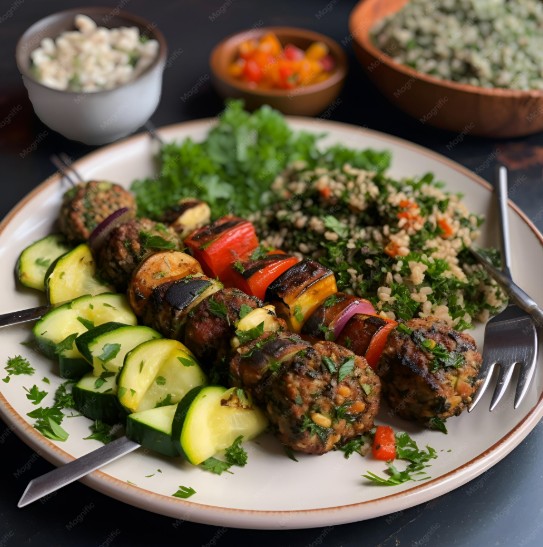
Mediterranean feast (Tabbouleh, Hummus, Baba Ghanouj, kebabs with Lebanese arak)
- Destination
As an immigrant the obvious #1 here is Lebanon, because that’s where family and home are, and I travel there almost annually. A huge plus: the food is phenomenal, especially when prepared by your own mother.
Thank you for your time, Dr. El-Khoury!