





My LHSC Elective Experience: From the Lab, the People, to the City
Submitted by Dr. Meshach Asare-Werehene, recipient of a 2025 CSCC Trainee Elective Visit Grant
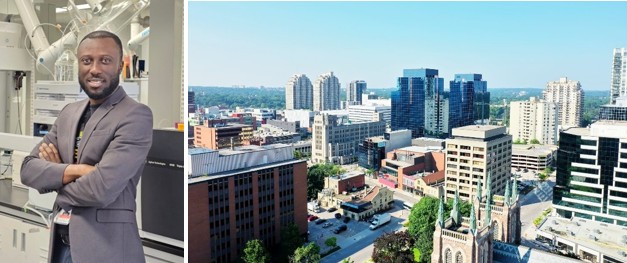
The CSCC Trainee Elective Visit Grant exists to give trainees exposure to specialized areas of laboratory medicine that may not be readily available at their home institutions, to broaden clinical insight, and to ultimately strengthen the future of clinical biochemistry in Canada. I am deeply grateful to be a 2025 recipient of this grant. Thank you, CSCC, for investing in trainees like me. Special thanks to my University of Toronto clinical biochemistry program directors, Dr. Paul Yip and Dr. Vathany Kulasingam, whose support made this visit possible.
Why London Health Sciences Centre?
The purpose of my visit to the London Health Sciences Centre (LHSC) was simple: learn from experts in areas where complexity meets clinical impact. My goals were to gain practical exposure to specialized autoimmune and trace element testing, strengthen consultation skills, and understand how high-complexity diagnostics translate to patient care. In short, I came to LHSC to connect science, systems, and people.
Warm welcome, smooth start
Dr. Michael Knauer (Clinical Biochemist and Division Head) welcomed me warmly and ensured I knew where to grab coffee. The onboarding process was refreshingly smooth with no “lost in hospital corridors” episode. The lab tour with Dr. Matthew Nichols and other biochemists sets the tone. The newly renovated lab space literally felt like “fresh air to breathe” – bright, organized, and buzzing with purpose. Morning huddles introduced me to the rhythm of the team: collaborative, focused, and occasionally sprinkled with humor – just how lab medicine should be.
Learning across disciplines
My week became a tour of subspecialties, each with its own personality. 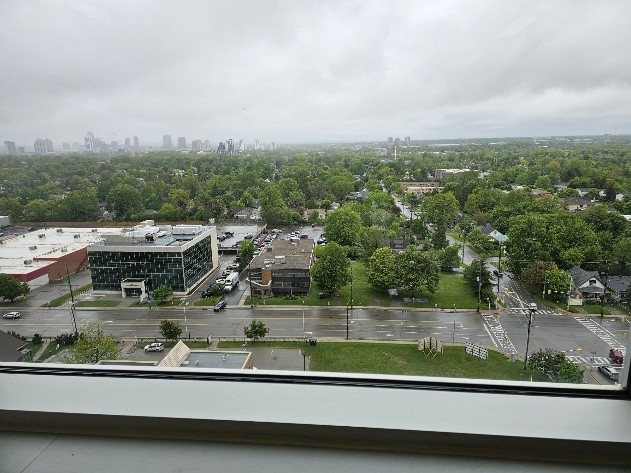
Under the guidance of Dr. Adrian Budhram (Neurologist), I gained in-depth exposure to neuroimmunology testing workflows and case studies, with a focus on how assay selection and testing algorithms influence diagnostic specificity and sensitivity. We reviewed the structured approach used at LHSC and participated in discussions on paraneoplastic panels versus comprehensive autoimmune encephalitis panels. A key learning point was the trade-off between sensitivity and specificity depending on whether tissue screening or immunoblotting is performed first – a nuance that has direct implications for false positives and downstream clinical management. Additional exposure with Dr. Ola Ismail (Clinical Biochemist) included ANA and ANCA testing algorithms and other autoimmune disease profiles, and discussions around assay limitations, reflex testing strategies, and quality control review. The case-based sessions highlighted how neuroimmunology is as much about pattern recognition and clinical reasoning as it is about laboratory technique.
My time in the Trace Elements and Toxicology Laboratory with Dr. Matthew Nichols (Clinical Biochemist) provided a comprehensive, end-to-end view of trace metal testing, from pre-analytical considerations to post-analytical interpretation. I observed and discussed ICP-MS/MS workflows, including sample preparation approaches, isotope selection, and gas mode optimization. We reviewed clinically relevant scenarios involving implant-related metals, nutritional assessments, and toxic exposures. I also had the opportunity to review quality control strategies and patient results. These sessions strengthened my appreciation for how analytical rigor directly impacts clinical decision-making…and who goes to LHSC without learning about using mass spec to detect monoclonal protein? I had to.
Dr. Ola Ismail brought me into the daily life of the routine lab with QC reviews, troubleshooting, and the unsung art of keeping systems running smoothly. Routine doesn’t mean simple; it means reliable, and reliability saves lives. A brief but insightful chat with Dr. Angela Rutledge (Clinical Biochemist) on endocrinology testing reminded me that no discipline in lab medicine works in isolation.
Evenings: the “London experience”
Now, let’s talk about my city exploration. As a part-time storyteller, writer and urban wanderer, I took the evenings to discover London, Ontario. The restaurants I tried met expectations (important scientific observation). I collected souvenirs for my “cities I’ve survived without a car” archive.
Speaking of cars… London taught me two things:
- Public transit builds character.
- Uber builds financial resilience.
Still, walking through the city, meeting friends I hadn’t seen in years, and absorbing the local vibe made the experience richer. Lab by day, life by night. Balance achieved.

People made the difference
What truly defined my elective was the people. The biochemists, clinicians, technologists, and administrative staff welcomed me generously, shared their expertise openly, and made me feel part of the LHSC family. Learning happened in formal sessions, yes – but also in hallway conversations, case discussions, and shared laughs over coffee.
Final reflections
This elective was more than technical exposure; it was a reminder that laboratory medicine is powered by humans – curious, dedicated, and collaborative humans. I returned not only with stronger clinical and analytical insight but also with renewed motivation to keep growing as a clinical biochemist.
Thank you again, CSCC, for the support that made this journey possible, and thank you to everyone at LHSC who contributed to such a meaningful experience.
From rail, lab, to people – what a ride.