




ASCC 2025 Annual Scientific Meeting: Interdisciplinary Impact in Action
Prepared by Drs. Sisu Han and Qi-Tong (Tom) Lin, Calgary Clinical Biochemistry Fellows
The Alberta Society of Clinical Chemists (ASCC) successfully hosted its 2025 Annual Scientific Meeting on October 17–18, 2025, in picturesque Jasper, Alberta, after having to reschedule the event following the devastating wildfires that severely impacted the town in July 2024. The meeting brought together clinical chemists, trainees, and clinician partners from across the province for a dynamic and focused scientific program highlighting the power of interdisciplinary collaboration in laboratory medicine. Attendees and sponsors were welcomed to the meeting with a Friday evening drop-in mixer that provided a relaxed environment to reconnect and informally network.
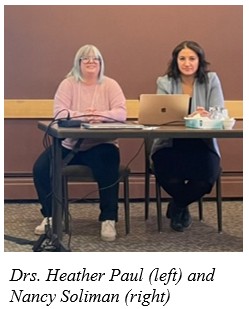
Meeting participants were then greeted with the beautiful morning backdrop of the majestic Canadian Rocky Mountains as they attended the first session of the scientific program. This year’s meeting kicked off with an entertaining and informative presentation on preeclampsia which was jointly presented by Calgary’s Dr. Heather Paul (Clinical Biochemist) and Dr. Nancy Soliman (Maternal Fetal Medicine Specialist). Guided by the theme Interdisciplinary Impact: Advancing Healthcare Through Teamwork, their session underscored the importance of close integration between laboratory services and clinical care when managing a condition that remains complex and variable in presentation. They reviewed the two‑stage pathophysiology of preeclampsia, beginning with abnormal placentation and progressing to angiogenic imbalance and maternal endothelial dysfunction and emphasized the need for early identification of patients at risk, particularly for preterm disease. First‑trimester screening (FTS) was highlighted as a key strategy, as early initiation of low‑dose aspirin remains the most effective intervention to reduce or delay preterm preeclampsia. The IMPRESS operational feasibility study as well as an integrated FTS model based on the Fetal Medicine Foundation approach was described, incorporating maternal history, standardized blood pressure measurement, uterine artery Doppler indices, and biochemical markers such as placental growth factor. The presenters also discussed ongoing challenges related to equitable access to early prenatal care across Alberta.
The trainee session showcased practice‑driven work by Calgary clinical chemistry fellows Drs. Sisu Han and Qi‑Tong (Tom) Lin. Dr. Han presented a local stability study of high‑sensitivity cardiac troponin I and T designed to support inter‑site referral pathways in Alberta, where laboratories are equipped for only one of the two assays. Dr. Lin presented an evidence‑based revision of the outpatient General Laboratory Requisition aimed at reducing unnecessary testing and improving workflow at collection sites.
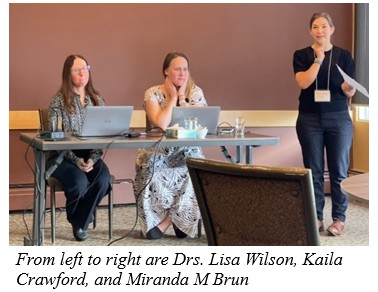 Session 2 provided a detailed exploration of laboratory medicine in rural and remote Alberta, presented from clinical and laboratory perspectives by Dr. Lisa Wilson (ER Physician, Seton – Jasper Healthcare Centre, Jasper, AB) and Dr. Kaila Crawford (General Pathologist, Edmonton, AB). The session traced the evolution of Alberta’s laboratory system from multiple regional models to a single integrated provincial service, highlighting both the benefits of harmonization and the risk that rural operational realities may be under-recognized when decisions are made centrally. The discussion emphasized the importance of equitable healthcare access across small and remote communities, where hospitals differ substantially in staffing models, on-call coverage, test volumes, service scope, and proximity to referral centres, and why standardized provincial policies may require local adaptation to remain safe, feasible, and clinically meaningful in rural settings. Several system-level initiatives were used as practical examples, including rural test-menu standardization and the province-wide harmonization of high-sensitivity troponin testing. These initiatives highlighted the balance required between evidence-based practice, quality burden at low-volume sites, and clinical need, as well as the importance of communication and clinician education during implementation and local engagement identified as key enablers of effective rural laboratory medicine.
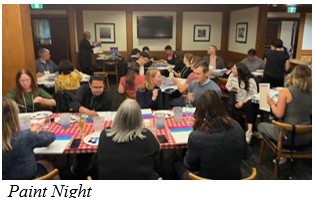
Following the scientific program, the ASCC Business Meeting was held and the evening continued with vendor exhibits and refreshments, supporting further discussion and networking. A dinner buffet followed, along with the presentation of the ASCC Outstanding Contribution to Clinical Biochemistry Award to Dr. Anna Fuezery. Although the recipient could not attend, her contributions were warmly recognized and celebrated. The meeting concluded with a lively social paint night, where participants created Rocky Mountain-inspired artwork under the guidance of an instructor. The event was met with enthusiasm, and the Best Painting award went to fellow Dr. Sisu Han. The 2025 ASCC meeting will remain a particularly positive and memorable highlight for its participants.